NCLifeSci Annual Meeting celebrates 50 years of biotechnology and looks to the next 50
The NC Life Sciences Organization joined the celebration of 50 years of biotechnology innovation at its 2026 Annual Meeting at SAS in Cary on Sept. 16. Nearly 300 industry leaders, policymakers, investors and patient advocates attended the daylong program.
Speakers used the 50th anniversaries of Genentech and SAS to review how the industry has grown and to outline the work ahead. Panels addressed federal policy, technology companies in North Carolina and the role of patients in drug development.
In an opening chat with NCLifeSci President Laura Gunter, Fritz Bittenbender, senior vice president of public affairs and access at Genentech and chair of the BIO Board of Directors, described North Carolina as a state where both political parties support the life sciences. He urged attendees to place patients at the center of policy decisions.
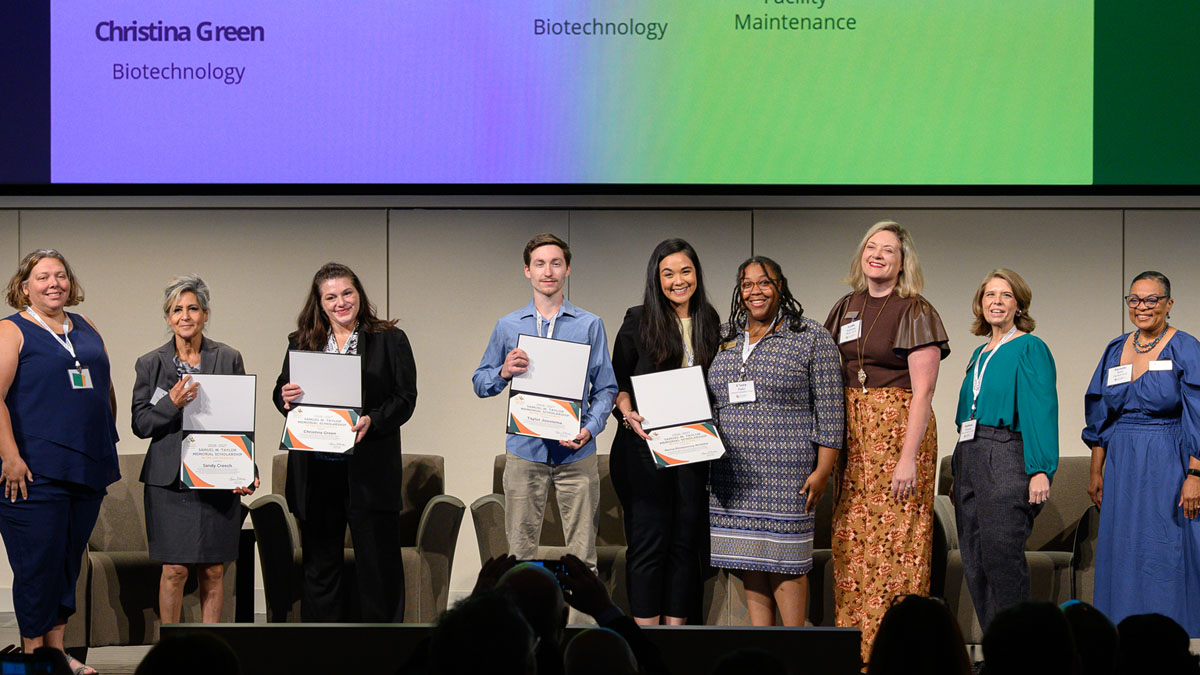
During the business session, NCLifeSci members approved eight nominees to its board of directors and recognized six recipients of the Samuel M. Taylor Memorial Life Sciences Scholarships.
Emcee Lauren Ansley guided attendees throughout the day and kept the audience engaged between panels.
Sponsors support the annual meeting
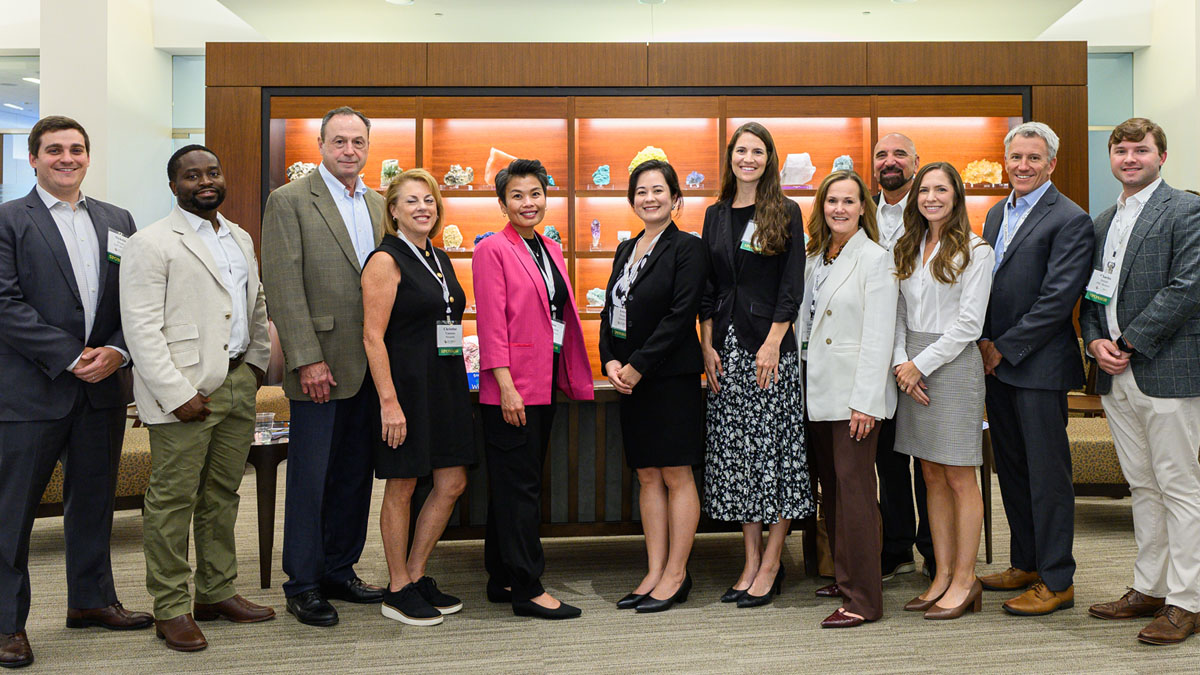
NCLifeSci is grateful to the sponsors who made the
2026 Annual Meeting possible and to SAS for hosting the organization again this year.
Genentech sponsored the closing networking reception and the event lanyards. Maynard Nexsen served as podcast sponsor and interviewed Bittenbender for its podcast after his keynote.
Platinum sponsors were ALT (American Laboratory Trading), Kymanox, Pfizer and VWR, part of Avantor.
Gold sponsors were Flad Architects, FUJIFILM Biotechnologies, GXP-Storage, Novartis, PSC Biotech and Smith Anderson.
Silver sponsors were AdvaMed, Alexandria Real Estate Equities, BioCryst Pharmaceuticals, Chrysalis, Dean Dorton, HIPP Design + Consulting, Eli Lilly and Co., Liquidia, Longfellow Real Estate Partners, Mentor Technical Group, PCI, PHC Corporation of North America, UCB and Uniphar.
Bronze sponsors were Alira Health, the Biotechnology Innovation Organization, Egnyte, Grifols, Kitted Lab Technologies, Marsh McLennan Agency, McDonald York Building Co., Novonesis, Reliance Engineers and SGS.
Bittenbender calls for patient-focused policy as biotech turns 50
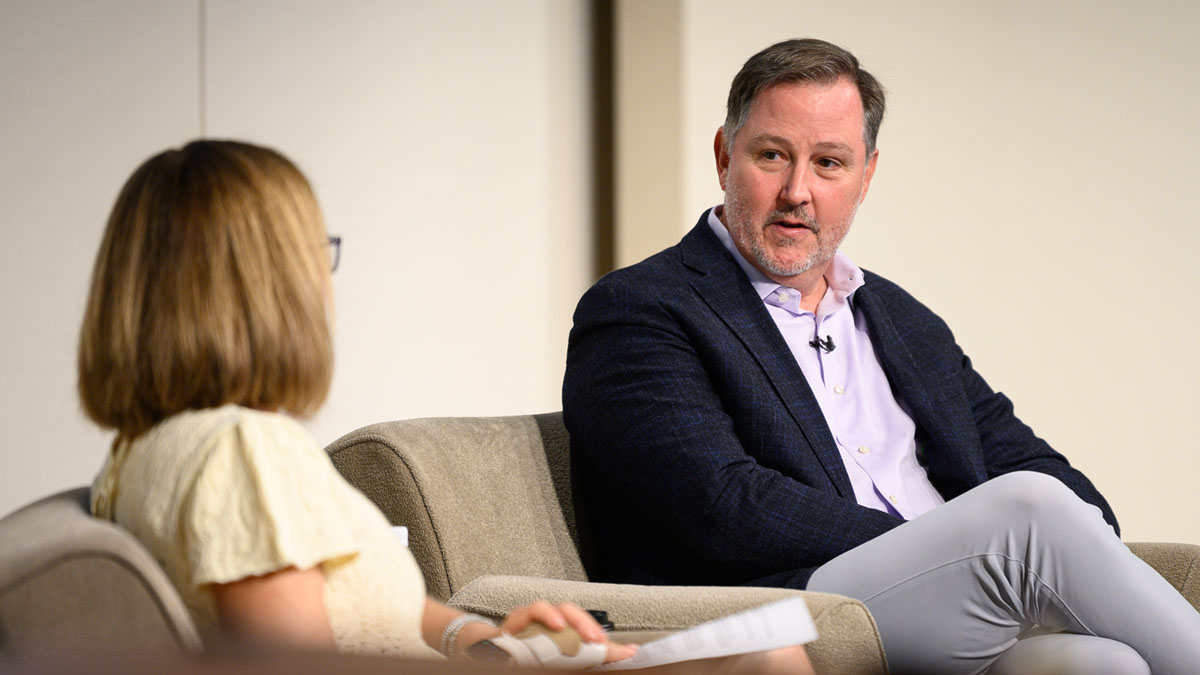
Chris Capel, a partner at Smith Anderson, introduced the opening session, "Celebrating 50 Years of Innovation, Policy and the NC Ecosystem." Gunter led the conversation with Bittenbender.
Bittenbender opened with the story of Genentech's founding: In January 1976, venture capitalist Robert Swanson asked University of California, San Francisco biochemist Herbert Boyer for a 10-minute meeting about Boyer's work reprogramming DNA to make medicine. Three hours later, the two men had a business plan written on a napkin.
"This is how our industry got started," Bittenbender said.
In Genentech's first year, company scientists produced somatostatin using recombinant DNA. By the second year, they had created synthetic human insulin, the first commercial product of the biotech industry. Bittenbender traced today's monoclonal antibodies, bispecific and investigational trispecific medicines, along with treatments for cancer, multiple sclerosis, asthma and bowel disease, back to the same technology.
"We're celebrating the 50th anniversary of why we're all in this room, which is the anniversary of biotechnology," he said.
Why Genentech chose North Carolina
Genentech is building a $2 billion biotechnology manufacturing facility in Holly Springs. The company first committed $1 billion and doubled the investment about three months later, Bittenbender said.
He said states from Texas to Florida competed for the plant. North Carolina won on three factors: coordinated support from local officials and the governor's office, a workforce system linking community colleges and universities, and bipartisan backing for the industry.
"If you're going to have the most state-of-the-art manufacturing plant ... we have to have the most state-of-the-art workforce," Bittenbender said. "We want to be in an environment where the environment wants us."
The company held the topping-off ceremony for the Holly Springs structure in August. Bittenbender said Genentech expects about 1,000 construction workers on the campus by January and plans to begin production by the end of 2029. The plant will produce cardiovascular, renal and metabolic medicines, including obesity treatments, and will become the highest-volume plant in the Genentech and Roche network. Between construction and full-time employment, the project will support about 2,000 jobs, he said.
A state at the center of the 2026 election
Bittenbender credited Gov. Josh Stein and Commerce Secretary Lee Lilley as strong partners. He called North Carolina one of the most closely watched states in the country this fall, pointing to the U.S. Senate race between former Gov. Roy Cooper and Michael Whatley and to new congressional district lines.
He praised members of both parties in the state's congressional delegation, including Republican Reps. Brad Knott, Richard Hudson and Greg Murphy and Democratic Reps. Valerie Foushee, Deborah Ross and Don Davis. He called retiring Sen. Thom Tillis one of the strongest champions of innovation in the Senate and thanked Sen. Ted Budd for his support, as well.
Three priorities for BIO
As BIO board chair, Bittenbender outlined three national priorities.
The first is affordability. He criticized most-favored-nations pricing, which ties U.S. drug prices to prices in other countries. He said the policy would let countries such as France set U.S. prices without lowering what patients pay at the pharmacy. BIO and Genentech are using data analytics to identify the patients who face the highest out-of-pocket costs, and BIO wants the next Congress to pass access and affordability legislation focused on those costs.
The second is FDA reform. He said China and Australia start clinical trials faster and at lower cost than the United States.
"We're creating medicine for the next century, and the regulatory environment was created in the last century," Bittenbender said.
The third is competition with China. More than half of the deal discussions at this year's J.P. Morgan Healthcare Conference involved Chinese companies, he said, and China has a 10-year plan to lead the world in biotechnology. He called the issue a matter of national security and said the U.S. response should include early-stage research grants, visa policies to attract scientists, FDA reform and consistent reimbursement.
"We can't stop it from happening. We have to outcompete China," he said.
Bittenbender also said misaligned financial incentives among manufacturers, insurers, pharmacy benefit managers, pharmacists and distributors leave patients out of most decisions about care delivery. He said companies will stay profitable if patients receive the medicines they need at a cost they can afford.
Audience questions
An attendee asked whether North Carolina will grow from a manufacturing center into a research hub on par with Cambridge, Massachusetts, and South San Francisco. Gunter cited the state's research universities and the NC Innovation program, which funds technology development at universities. She said young companies will need more state support and venture capital to stay and grow in North Carolina.
Bittenbender described three paths to a larger research base: recruiting large research organizations, expanding clinical research at hospitals and strengthening university technology transfer. He said strong clinical research and spinout companies attract larger investors.
A second attendee asked about FDA action on investigational new drug applications. Bittenbender said a trial takes about two months to start in China and about a year in the United States, and the FDA has begun work on programs to shorten the gap. He warned the FDA wants trial data from outside China and might reject applications with a large share of Chinese patients.
He also said institutional review board approvals often delay trial sites by six to eight months. He suggested North Carolina health systems form a clinical trial consortium with a shared review process to cut startup times to one or two months. Gunter added NCLifeSci participates in negotiations over the next FDA user fee agreement, known as PDUFA VIII.
SAS and Genentech leaders say talent, trust and patients will shape the next 50 years
The afternoon session "50 Years of Innovation: Past, Present and Future" brought together leaders from two companies marking 50 years in 2026. Marlene Sanders-Seye, director of state government affairs and policy at Merck, moderated the discussion with Steve Kearney, Pharm.D., global medical director at SAS, and Joash Mudalige, vice president and site head for Genentech in Holly Springs.
Mudalige said he takes the most pride in Genentech's Holly Springs investment. "Genentech and Roche don't invest $2 billion every day," he said.
Kearney said SAS turned analytics into a tool people use every day and helped bring trusted, evidence-based medicine to clinicians, regulators and public health agencies.
Talent and partnerships
Mudalige called talent the state's top advantage. Genentech receives close to 150 applications for each open position, and most applicants hold strong qualifications, he said. Seven of the eight members of his leadership team live in the area, and 60% to 70% of new hires come from the area.
He contrasted North Carolina with Midwestern states where he previously ran plants. He cited partnerships with Wake Technical Community College, Durham Technical Community College and the Biomanufacturing Training and Education Center at NC State University and said educators invite industry to help build curriculum.
Kearney, a native of eastern North Carolina, said he trained at Duke University and served on the faculty at Duke and UNC-Chapel Hill before joining SAS. He noted SAS started at NC State and said collaboration among the state's public and private universities, NCLifeSci and the NC Biotechnology Center attracts talent and sets high standards.
What the state should do better
Mudalige said infrastructure must keep pace with growth. He listed water, wastewater treatment, the power grid and road access to new plants. He also urged the state to recruit more experienced biomanufacturing workers rather than rely on companies trading employees.
Kearney called for more investment in translational medicine. SAS hosts an artificial intelligence lab for translational medicine in the Netherlands, and he said North Carolina institutions would benefit from a similar model.
Technology with a human in the lead
Genentech built a digital twin of the Holly Springs plant with Nvidia and Accenture. Mudalige said the company plans to connect the simulation to real-time plant data from enterprise, manufacturing execution and shop floor systems. He described a supervisor arriving for a 6 a.m. shift to find options already prepared by a machine-learning model after thousands of simulations. Supervisors in a traditional plant spend the first two to four hours of a shift on this analysis, he said.
Kearney said SAS builds tools for real-time clinical trials, including engines based on the Fast Healthcare Interoperability Resources standard to pull data into a common model. SAS also applies lessons from banking, where its software runs 17 models to evaluate each Mastercard transaction in 30 milliseconds.
Both leaders said people must stay in charge of AI. Kearney said SAS prefers "human in the lead" over "human in the loop" and requires AI results to trace back to their sources. SAS runs a data-ethics practice and trains employees in AI literacy.
"Fifty years of trust can be gone in 50 minutes or 50 seconds," Kearney said.
Mudalige said automation will remove routine tasks and give frontline supervisors more time to coach and mentor employees. He encouraged life sciences companies to stay open to innovation while balancing risk.
Looking ahead
Mudalige said Genentech is expanding into cardiovascular, renal and metabolic diseases, an area of large unmet need with more than 100 conditions linked to obesity. He said he wants the Holly Springs plant to employ generations of local families.
"Genentech is here to stay," he said.
Kearney pointed to quantum computing research on the SAS campus and said voice commands will replace keyboards. He said the goal remains faster help for patients.
"The patient is waiting," Kearney said.
Federal panel sees steadier FDA and bipartisan focus on competing with China
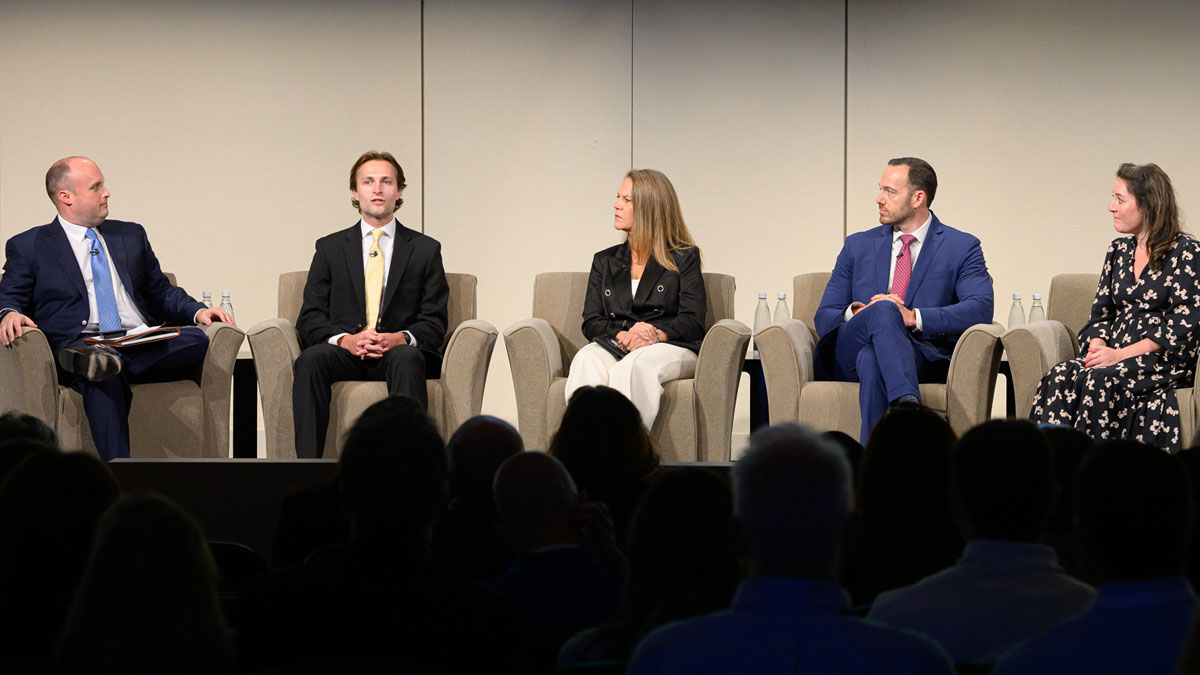
BIO's Andrew Barnhill moderated the federal policy panel comprising Carson Billingsley of Novonesis, Rachael Fones of IQVIA, Adam Lotspike of BD and Angela Wiles of Pfizer.
Nick Bruck, director of business development at GXP Storage, introduced "Looking to the Future: Federal Landscape and Innovation." Andrew Barnhill, senior vice president at the Biotechnology Innovation Organization, moderated the panel.
Panelists included Carson Billingsley, process engineer at Novonesis; Rachael Fones, senior director and head of regulatory and policy for design and delivery innovation at IQVIA; Adam Lotspike, senior director of U.S. government relations at BD; and Angela Wiles, senior director of federal government relations at Pfizer.
A calmer FDA
Wiles said a Senate-confirmed FDA commissioner will bring stability and predictability to the agency. Fones said the FDA has moved from uncertainty to stability and opportunity, with policy now arriving through formal guidance instead of what she called "policy by podium and podcast." Lotspike said the agency lost experienced staff during federal workforce cuts and needs more technical experts to review AI and other new technologies.
Billingsley said federal rules for agricultural and industrial biotechnology have changed little in 40 years. Companies must fit new tools such as CRISPR into four older statutes, and overlapping jurisdiction slows small companies, he said.
Clinical trials and China
Barnhill and Fones both worked on Operation Trialblazer, a federal effort to speed clinical development. Wiles said Pfizer has studied inefficiencies in U.S. trials and responded to a request for ideas from Rep. Jake Auchincloss, D-Mass.
Fones shared IQVIA data from recent congressional testimony. The U.S. share of global phase 1 trial starts rose from 23% to 27% last year, while China's share rose from 31% to 35%. About 88% of phase 1 starts in China came from Chinese companies running trials at home. She said lawmakers should separate China's growth in homegrown innovation from the smaller but growing number of U.S. and European companies starting trials in China and Australia.
Lotspike said health security is national security. BD is the last domestic manufacturer of hypodermic needles and syringes, down from three manufacturers before the COVID-19 pandemic. Billingsley, a former policy analyst for the National Security Commission on Emerging Biotechnology, said biotechnology also supports food security and economic security.
Deals, AI and 2027
Wiles said Pfizer reached one of the first drug pricing agreements with the Trump administration and committed about $70 billion to U.S. investment. Lotspike said medtech companies hope for durable public-private partnerships to build supply chain capacity.
Looking to 2027, Lotspike predicted AI will dominate congressional debate.
"The conversation on the Hill right now ... is, 'Is AI going to kill us?'" he said.
Lotspike warned broad AI rules will sweep in medical device makers the FDA already regulates. Wiles expects a slow legislative start, followed by work on FDA user fee agreements and the National Defense Authorization Act. Billingsley said affordability and the Make America Healthy Again movement create openings for fermented and natural ingredients.
Panelists advised smaller companies to work through trade associations such as NCLifeSci, meet with local members of Congress and bring patients to those meetings. Fones urged companies to put a human face on their issues.
Technology panel: North Carolina offers talent, but capital remains scarce
Alma Montemayor, director of project development at Flad Architects, introduced "Technology Landscape in NC." Kseniya Simpson, Ph.D., partner at Hatteras Venture Partners, moderated the panel.
Panelists included Tom Alapaattikoski, CEO of Brinter; Dan Estay, founder and CEO of SonoVascular; Jason Krentz, chief operating officer of AskBio; Amber Raines, Ph.D., senior director of client project management at Coriolis Pharma; and Gina Sloan, Ph.D., founder and CEO of AGRITX.
Why North Carolina
Sloan runs AGRITX from Statesville, near many of the world's largest poultry producers. Poultry ranks as North Carolina's top agricultural commodity and generates more than $40 billion a year, she said.
Raines said Coriolis Pharma, a spinout of Ludwig Maximilian University of Munich, opened its first U.S. headquarters in Research Triangle Park in March. Krentz said AskBio grew from UNC-Chapel Hill gene therapy research in 2001. Bayer acquired the company in 2020, and AskBio now employs almost 900 people worldwide while keeping its headquarters in North Carolina.
Estay said he started SonoVascular in North Carolina after reading a journal abstract about technology from the joint biomedical engineering department of UNC-Chapel Hill and NC State. Alapaattikoski brought Brinter from Finland after touring several states and chose North Carolina in part because of the Wake Forest Institute for Regenerative Medicine.
AI and gene therapy
Raines said she once spent weeks processing particle data by hand.
"Now I push a button and it's done in five minutes," she said. She added experienced scientists must still review what AI models produce.
Krentz said AskBio uses predictive models to engineer "better medicines before they're made." He said data quality, not AI models, now limits progress. AskBio finished enrolling a phase 2 gene therapy trial for congestive heart failure and expects results next year. The company also runs a gene therapy program for Parkinson's disease. Treating large patient populations will require scalable, affordable manufacturing, he said.
Commercialization and funding
Alapaattikoski said Brinter's first product, a regenerative implant for tendon and rotator cuff repair, will reach the market next year. About half of traditional rotator cuff repairs fail, he said. The company also is developing a regenerative breast reconstruction implant.
Estay said medical device companies must prove economic value as well as clinical value to win hospital approval. "Saying it's selective is putting it kindly," Estay said of the investment climate.
SonoVascular has raised $14 million, and Estay said his board chair, with 40 years of experience, calls the current funding climate the worst he has seen. The company moved manufacturing in-house to save millions of dollars and recently ran its first human study in Chile.
Alapaattikoski said medical device startups need more access to debt financing.
The next five years
Sloan said she wants North Carolina "known as a biotech state, not a biotech center," with innovation across rural areas as well as Raleigh and Charlotte. Krentz hopes North Carolina launches one of the first gene therapies for a common disease. Estay said the state lacks anchor medtech companies and venture investors, and he wants the region to become a lasting medtech hub.
Patient panel urges companies to involve patients from the start
Chandler Conley, senior director of technical operations, East Coast, at PSC Biotech, introduced "The Point is the Patient." Lori McLeod, Ph.D., vice president of patient-centered outcomes assessment at RTI Health Solutions, moderated the panel.
Panelists included Nicole Bell, CEO of Galaxy Diagnostics; Meghan Bradshaw, executive director of the Center for Lyme Action; Pat Ritschel, CEO of Atsena Therapeutics; and Jeff Todd, president and CEO of Prevent Blindness.
Personal paths to the work
Bell joined Galaxy Diagnostics, an NC State spinout focused on tick-borne disease, after doctors misdiagnosed her husband's illness. She said 70% to 77% of infected patients tested in the early stages of Lyme disease receive negative results.
"It's less accurate than a coin flip," she said.
"I like to say I was recruited by a tick," said Bradshaw, who lived with a misdiagnosed tick-borne illness for more than a decade and underwent 10 joint replacements. She now leads a national advocacy network of more than 11,000 people. She said her group celebrated the unanimous congressional passage of tick-borne disease legislation the day before the meeting.
Ritschel entered biotechnology after two of his daughters received a Friedreich's ataxia diagnosis. He helped build Bamboo Therapeutics, which Pfizer acquired in 2016, and StrideBio before joining Atsena, an ocular gene therapy company in Research Triangle Park.
Bring patients in early
"The patient experience is expertise," said Todd, who has led Prevent Blindness for 23 years.
"However early you think you should bring them in, bring them in even before that," Todd told companies. Prevent Blindness has trained about 300 patients to tell their stories and to understand clinical trials and FDA hearings.
Ritschel said every new Atsena employee meets with patient advocates, and patients join quarterly company meetings. He urged companies to consult patients before designing trial protocols, reduce burdensome assessments and plan travel support for caregivers.
Bradshaw pointed to a Department of Defense medical research program in which patients help review grant proposals. She said advocacy groups must remain neutral to avoid appearing to endorse a product.
"I have to be like Switzerland," Bradshaw said.
Bell said advocates gain credibility by leading with science.
"You've got to lead with data, and you've got to lead with the solutions," she said.
Bell also said Galaxy has to set clear boundaries with patients who are looking for medical advice, because the company does not provide care.
North Carolina's role
Bell described tick-borne disease research at NC State, Duke University and UNC-Chapel Hill. UNC-Chapel Hill researchers found more than 30% of black-legged ticks collected in Biltmore Forest carried the bacteria behind Lyme disease, she said. Galaxy is one of six teams in the national LymeX diagnostics initiative.
Bradshaw said biomedical innovation and public health offer common ground across party lines in a politically divided state.
Success in five years
Ritschel wants the discussion to shift from when to involve patients to how to involve them better. Todd reminded attendees everyone becomes a patient or caregiver at some point. Bell wants patients to be able to buy tick-borne disease test kits at a pharmacy and wants more funding for diagnostics.
McLeod closed with words from a patient in one of her projects: "Nothing about us without us."
Members approve board nominees and honor Taylor Scholarship recipients
NCLifeSci members unanimously approved eight new members of its board of directors for two-year terms.
New members entering a first three-year term include
-
Cindy Atwell, chief development and business officer at Precision BioSciences;
-
Nate Bennett, RTP site lead and global head of development for galvokimig at UCB;
-
Patrick Downie, senior director of digital engineering at BD;
-
Michael Easley, partner at McGuireWoods;
-
Rachael Fones, senior director and head of regulatory and policy for design and delivery innovation at IQVIA;
-
Matthew Foster, RTP site head at Lilly;
-
Thomas Kaiser, founder and chief scientific officer at Avicenna Biosciences; and
-
Ian Miller, chief operating officer at Pairwise.
Members also approved Lori McLeod of RTI Health Solutions, who joined the board midyear to replace Peter Wirth, as she begins her first full three-year term, as well as Laurie Braxton, senior vice president and site head at FUJIFILM Biotechnologies; Buck Phillips, chief operating officer and chief financial officer at Domantle Consulting; and Dave Posehn, Sanford site head at Pfizer, who begin their second terms.
Gunter then presented the 2026-27 Samuel M. Taylor Scholarships. She said Taylor, who died unexpectedly in 2021, worked behind the scenes for years to build North Carolina's biomanufacturing workforce programs, including NCBioImpact, BTEC, BRITE and community college training.
NCLifeSci members and the organization created the scholarship fund, which the North Carolina Community College Foundation manages. The fund holds more than $250,000 in pledges and now supports several students each year. Gunter thanked Alexandria Real Estate Equities for hosting a poker night to raise additional money for the fund.
This year's recipients are:
-
Sandy Creech, biotechnology, Caldwell Community College and Technical Institute
-
Christina Green, biotechnology, Caldwell Community College and Technical Institute
-
Gina Dixon, clinical research associate, Durham Technical Community College
-
Marisa Phisayavong-McNellie, biotechnology, Johnston Community College
-
Taylor Joostema, facility maintenance, Wake Technical Community College
-
Khalik Weaver, biotechnology, Wilson Community College